


Table of Contents
- Understanding Project-Based Learning
- Bridging the Gap Between Education and Career Readiness
- Enhancing Student Engagement Through Real-World Applications
- Developing Essential 21st-Century Skills
- Implementing PBL in Diverse Educational Settings
- Overcoming Challenges in PBL Adoption
- The Future of PBL in Education
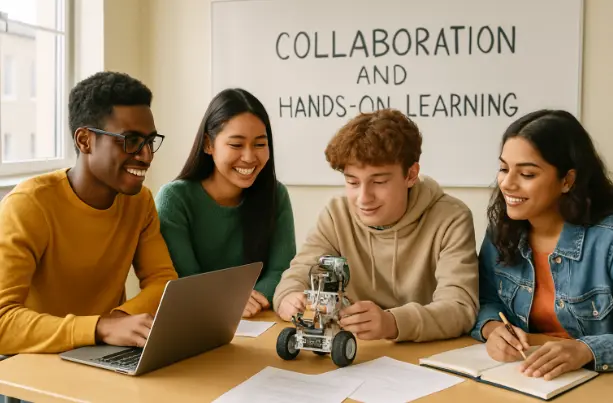
In today’s rapidly evolving professional landscape, traditional educational models are facing growing scrutiny. Employers are seeking out candidates with not only foundational knowledge but also adaptable skills, innovative thinking, and the ability to solve complex, real-world problems. Project-Based Learning (PBL) responds directly to these demands, offering a pathway for students to engage deeply and meaningfully with curriculum while developing vital skills for the future. For schools interested in hands-on, technology-driven coursework, opportunities like a private school robotics program embody the spirit and benefits of PBL.
Unlike conventional instruction, which often relies on memorization and repetition, PBL encourages students to engage with real-world scenarios, where they must research, create, and collaborate. As industries continue to shift under the influence of technology, automation, and global connectivity, education systems must evolve to provide students with opportunities to learn by doing—equipping them to enter tomorrow’s workforce with confidence and competence.
Forward-thinking educators recognize that classrooms should be a microcosm of the broader professional and societal world. Project-Based Learning bridges this divide, as students are tasked not just with solving textbook problems but with addressing genuine challenges and presenting solutions to authentic audiences. This not only strengthens their academic understanding but also develops their character, communication skills, and resilience.
Families and educators searching for innovative ways to prepare children for unpredictable futures will find PBL especially valuable. Experiences like science fairs, model UNs, and robotics tournaments reinforce PBL’s multidisciplinary strengths and spark a love of learning that goes beyond grade level or subject area.
Understanding Project-Based Learning
Project-Based Learning is an instructional approach that empowers students to pursue answers to meaningful questions, challenges, or problems. Spanning weeks or even months, projects require learners to engage in research, critical reflection, and creative synthesis, ultimately sharing their findings or creations with others. Unlike passive learning, PBL is an active and student-centered approach that builds deeper content mastery and key life skills simultaneously.
Bridging the Gap Between Education and Career Readiness
In an era when the shelf life of technical skills is growing shorter, education must foster adaptability and career navigation abilities. PBL integrates career-connected learning by weaving professional scenarios, such as business planning or engineering design, into the classroom fabric. As reported by Forbes, education that embraces real-world career navigation is indispensable for preparing students to thrive in a rapidly changing workforce. By solving practical problems during their school years, students become practiced in applying knowledge—not just recalling it.
Enhancing Student Engagement Through Real-World Applications
Engagement is a cornerstone of effective learning. According to K-12 Dive, students are much more likely to be engaged when assignments reflect real-life contexts or connect to their own interests. PBL’s design ensures material is relevant and exciting, motivating learners to expand their perspectives, inquire, and persist through setbacks. Whether students are collaborating on a community garden, programming a robot, or organizing a school-wide event, their sense of purpose and ownership drives deeper learning and retention.
Developing Essential 21st-Century Skills
The modern workplace places high value on skills such as communication, critical thinking, adaptability, teamwork, and digital literacy. Project-Based Learning develops these attributes organically. Projects require debate, negotiation, and collective decision-making, which is similar to the collaborative environment of professional teams. Moreover, the need to present work to authentic audiences helps students hone their public speaking and persuasive writing skills. These competencies are repeatedly cited as top needs in research, including studies by the Brookings Institution, which emphasize the development of social and emotional skills alongside academics for lifelong success.
Implementing PBL in Diverse Educational Settings
Project-Based Learning’s flexibility means it can be integrated in any setting—from public to private schools, and from STEM-focused environments to arts education. For example, some schools anchor their PBL approach in local community issues, cultivating civic responsibility and leadership. As noted by Community School, effective PBL makes learning engaging, relevant, and impactful by connecting it to students’ immediate world and the broader community.
Other models leverage global connections, enabling students to collaborate with peers worldwide through digital platforms, thereby preparing them for global citizenship and international careers. Regardless of the context, thoughtful scaffolding and robust support systems are essential to ensuring that all students benefit from the process.
Overcoming Challenges in PBL Adoption
Transitioning to PBL isn’t without obstacles. Educators may struggle with balancing guidance and autonomy, designing robust assessment methods, or managing time and resources effectively. Building teacher capacity through professional development and peer collaboration is essential. Additionally, aligning PBL projects with standards and learning objectives—without sacrificing creativity—helps ensure academic rigor and accountability. School leaders who champion experimentation and support ongoing learning for teachers foster a culture where PBL can thrive.
The Future of PBL in Education
As new technologies reshape industries and redefine skill demands, education must prepare students for both uncertainty and opportunity. Project-based learning will continue to gain traction thanks to its ability to nurture resilience, empathy, and a lifelong passion for learning. Graduates of PBL-centered programs bring agility, initiative, and experience working on complex problems—qualities that employers, communities, and the world need now more than ever.
By bridging the gap between theoretical knowledge and hands-on practice, PBL enables students to become not only learners but also leaders and innovators. Schools that adopt this methodology, along with experiences like private school robotics programs, are positioning their students at the forefront of tomorrow’s workforce—ready to thrive, adapt, and drive meaningful change.
Also Read-A Complete Homeowner’s Guide to Vinyl Window Installation and Understanding Window Parts

