


Introduction
Many people believe that building lean muscle means lifting heavy weights in the gym. However, you can develop strength, tone, and muscle definition without overloading your joints or using bulky equipment. Alternative training methods can help you strengthen and tone muscle Virginia Beach, achieving the physique you desire with minimal equipment and less physical strain.
Focusing on functional strength, stability, and endurance, these methods are effective for people of all fitness levels. Whether you’re just starting your fitness journey or looking to switch up your routine, building lean muscle without heavy weights can help you improve muscle definition, posture, and overall health. By prioritizing a well-rounded approach, you can achieve lasting results that align with your lifestyle and goals.
Understanding Lean Muscle Development
Developing lean muscle centers on increasing muscle endurance and strength rather than bulk. Lean muscle is associated with a toned, defined appearance and enhanced functional fitness—beneficial for daily activities and sports performance. Instead of maximizing the amount you can lift, you practice high-quality movements for better body control, flexibility, and balance. This makes your training safer for joints and easier to maintain over time.
Building lean muscle through lighter resistance or bodyweight exercises focuses on slow, controlled movements and proper technique. This not only promotes injury prevention but also leads to more sustainable improvements in strength and muscle tone.
Effective Bodyweight Exercises
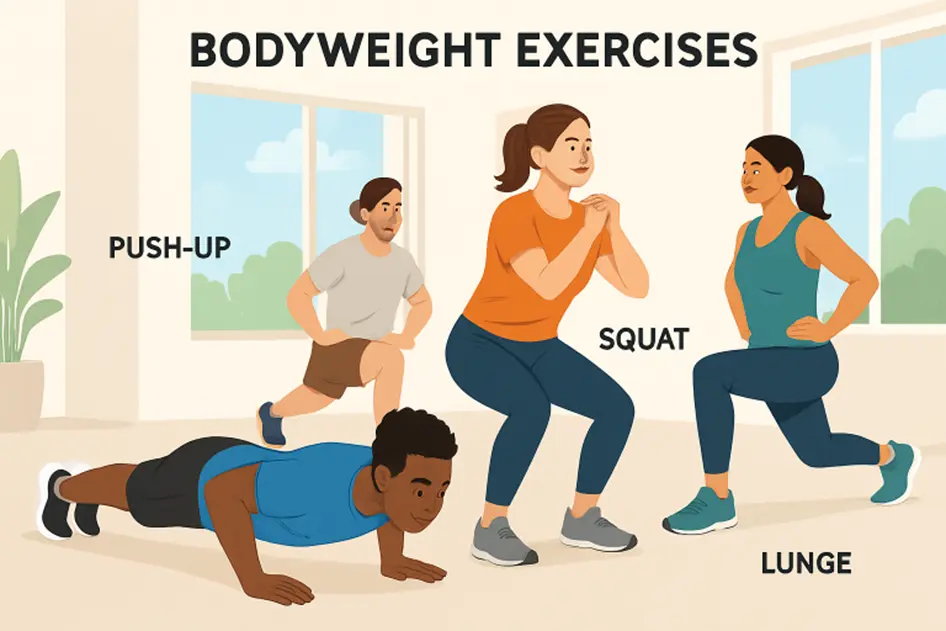
Bodyweight exercises are among the most accessible ways to develop lean muscle, as they require no equipment and utilize your own body weight as resistance. Incorporate the following exercises into your routine for a full-body workout:
- Push-Ups:Work the chest, shoulders, and triceps while also challenging your core.
- Squats:Target the quadriceps, hamstrings, and glutes—all essential for functional lower-body strength.
- Lunges:Engage the legs, glutes, and help improve balance and coordination.
- Planks:Strengthen the entire core, including abs, back, and shoulders.
The versatility of bodyweight exercises enables you to build muscle and endurance, progress at your own pace, and minimize the risk of injury by mastering the fundamentals of movement.
Incorporating Resistance Bands
Resistance bands offer adjustable tension that protects joints while still providing an effective muscle-building workout. Lightweight and easily portable, bands are ideal for use at home, during travel, or at the gym.
- Bicep Curls:Easily target and strengthen the biceps without heavy free weights.
- Shoulder Presses:Build shoulder definition and upper body endurance.
- Leg Presses:Activate the lower body, focusing on quadriceps, hamstrings, and glutes.
Resistance bands add variety and can be used in combination with bodyweight exercises and other training methods to challenge your muscles and prevent plateaus continually.
Utilizing Calisthenics
Calisthenics combines dynamic bodyweight exercises to enhance strength, flexibility, and overall fitness. This style emphasizes multi-joint exercises that engage multiple muscle groups simultaneously, leading to increased calorie burn and enhanced muscle definition.
- Pull-Ups:Engage the back, shoulders, and arms, while promoting grip strength.
- Chin-Ups:Target biceps and upper back, providing a strong arm workout.
- Jump Lunges:Combine lower-body strength, explosive power, and cardio.
Start with assisted versions of these moves or increase the challenge with variations for continual progress. Calisthenics is highly scalable and can keep your workouts engaging and effective.
Incorporating Pilates for Muscle Toning
Pilates is a mindful fitness approach that focuses on strengthening, improving flexibility, and toning muscles—especially in the core. Through controlled, precise movements and breathing techniques, Pilates exercises engage the stabilizer muscles and promote overall muscle definition.
- Leg Circles:Strengthen hip flexors and thigh muscles while promoting hip joint stability.
- Plank Variations:Intensify core and upper body engagement to support better balance and posture.
- Bridge Exercises:Enhance glute strength and lumbar support, which are essential for both aesthetic appearance and spine health.
Regular Pilates practice not only improves muscle definition and flexibility but also guides you toward better movement patterns and increased resilience to injury.
Implementing High-Rep, Low-Weight Training
Performing high-repetition exercises with light resistance is ideal for developing muscle tone and stamina, rather than bulk. This method involves using less weight but increasing the volume of repetitions per set, focusing on endurance and definition:
- Light Dumbbell Shoulder Presses:Help refine shoulder shape while preventing strain.
- Resistance Band Rows:Strengthen your back and improve posture without bulky weights.
- Bodyweight Squats:Build lower-body endurance and tone your muscles effectively with higher repetitions.
High-rep, low-weight routines are accessible for all ages and fitness stages, reducing the risk of injury while delivering lean muscle results. Consistency with this approach helps maintain a sculpted, athletic build.
Final Thoughts
Building lean muscle doesn’t require heavy lifting. Instead, combining approaches like bodyweight exercises, resistance bands, calisthenics, Pilates, and high-rep, low-weight routines can help anyone achieve muscle tone, endurance, and strength. Emphasizing proper technique, gradual progression, and a balanced approach will lead to lasting, sustainable fitness. Remember, consistency in your workouts and varying your movement patterns is essential for long-term muscle development and improved health.
Also Read-Technology That Actually Helps Healthcare Work Better

