


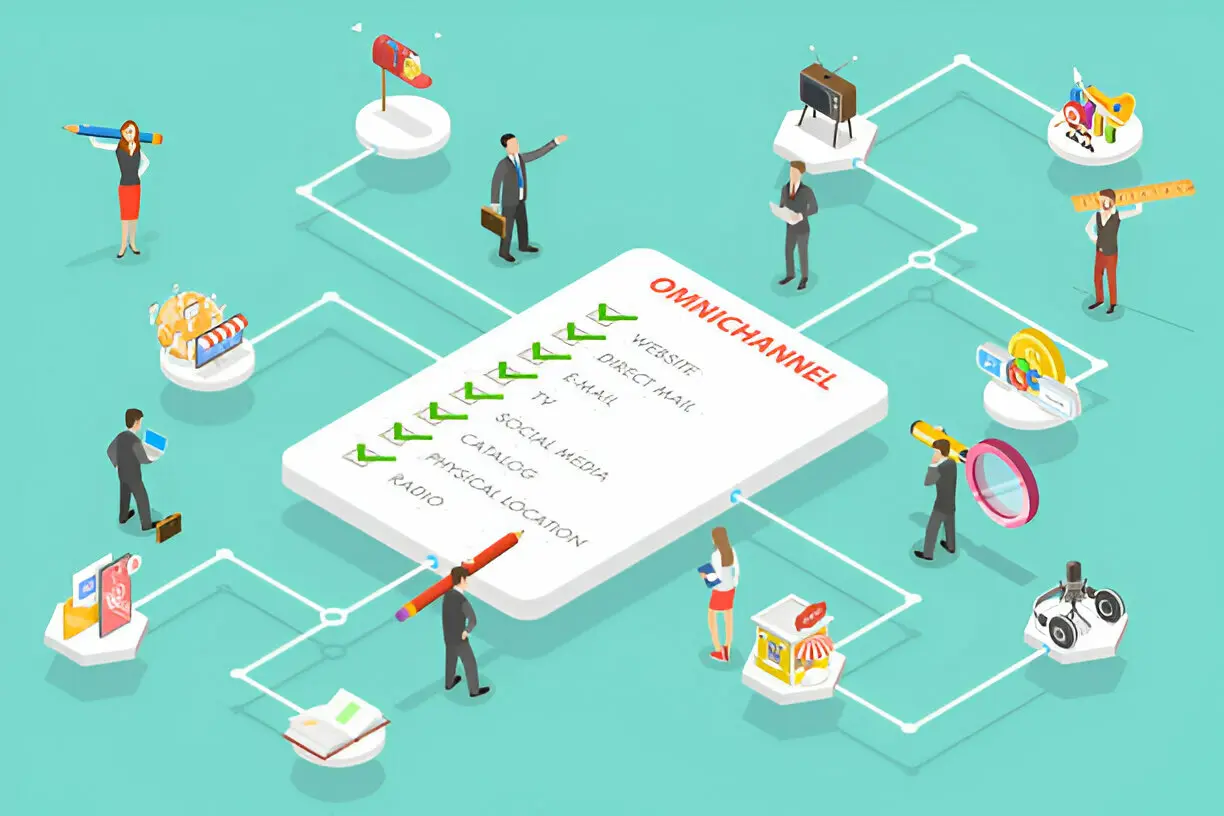
In today’s digital marketplace, standing out is more challenging than before. Customers sometimes need to see your brand at least seven times before making their first purchase. This means that the more different sales channels you operate on, the greater the chances of achieving that conversion into new customers.
Thanks to technology and the internet, we have multiple options for selling our products: we can start with our own websites and then expand to other marketplaces, apps, social channels, and retail partners. However, each of these channels requires product content in different formats, resolutions, and specifications.
Therefore, achieving this adaptation effectively has become a competitive advantage. In this article, we’ll explain how to do it smoothly.
The Multichannel Content Challenge
For companies with only a few products, opening new sales channels can feel quite straightforward.
Information is stored in spreadsheets, shared drives, or documents; then, teams manually adapt media assets according to each channel’s specs, upload them one by one, and voilà — the business is now on multiple platforms. Since there are only a few items, it is easy to do this way, and can be done in a short amount of time.
But the dilemma starts as your company grows. When you’re no longer managing 15 products but 450, this manual process, which usually took an afternoon, can now take days, consuming all of your team’s time. Below, we’ll look at three factors that influence when opening new sales channels. Most process require accessing it through different means check BingeCringe for more information.
Format Fragmentation
Each platform has its own requirements. For example, Amazon may require 1500×1500 pixel images with a pure white background, while your Shopify store might benefit from lifestyle photography at 2048×2048.
On the other hand, B2B platforms developed by B2B marketing agency often require downloadable technical specifications in PDF format, and social platforms may need square-format images at 1080×1080.
So, when you need to adapt hundreds of products, this task can get much more complex. Without a systematic approach, this variation forces teams to manually recreate content for each destination, dramatically increasing workload and introducing potential inconsistencies.
Channel-Specific Content Optimization
Adapting content isn’t just about resizing media assets; it also extends to optimizing content based on each platform’s nature. For instance:
- Marketplace listings prioritize search optimization and bullet point formatting.
- Social commerce converts better to inspirational, lifestyle content.
- DTC websites benefit from storytelling.
- B2B channels require detailed specs and documentation.
That’s why the language you use also influences how your content performs; adapting it without losing your brand’s personality is key.
Update Synchronization
One of the biggest challenges for many businesses is keeping information updated across all channels.
Without a centralized system that allows you to update your information uniformly using a single source of truth, updates will take longer and can easily cause inconsistencies. Updates might be triggered by a seasonal sale, a specification change, or an inventory status change, and if they aren’t handled properly, they can have multiple effects.
Mainly, on user perception. If customers compare your product information across your different channels and it doesn’t match, it can cause confusion, which damages your brand’s reputation. Customers might place orders and receive items that don’t meet the specifications they expected, leading to frustration, returns, and additional costs.
It can also lead to overselling out-of-stock items, due to desynchronized inventory updates.
The Hidden Costs of Fragmented Content Systems
Research shows that businesses relying on fragmented content management face hidden costs like:
- Extended time-to-market: Due to loading and updating delays across sales channels, your product’s market launch can be pushed back, giving competitors an advantage.
- Content inconsistency: Manual updates can lead to mismatched information across platforms, hurting customer trust.
- Team inefficiency: Teams can spend up to 30% of their day searching, managing, and updating content across platforms, time that could be invested in development and innovation.
- Missed sales opportunities: Delays in updating seasonal inventory, promotional pricing, or product features across all channels can reduce campaign effectiveness.
Building a Multichannel Content Strategy
There are efficient ways to manage product information across multiple sales channels.
Mainly, you can establish a single source of truth, meaning you centralize all your information into one hub and distribute it to platforms in a synchronized way. You’re not only storing all your product information (descriptions, media assets, prices, specifications) in one place, but you’re also maintaining consistency.
Moreover, rather than creating content channel by channel, teams are implementing content-first workflows where assets are created at the highest quality and then adapted for specific channels. For example, you could take 4K photographs and later crop them according to each platform’s requirement; write modular copy that can be expanded or condensed based on channel needs; and create product specification databases that can output information in multiple formats.
Since this is a challenge that many companies face, systems have been developed to help e-commerce businesses with hundreds and even thousands of products centralize product information and be more efficient. Product Information Management (PIM) systems solve this by centralizing all product data, like specifications, pricing, descriptions, categorization, and images in one place.
What’s impressive about these tools is the synchronization across all connected channels, since changes made in the PIM automatically propagate.
Solutions like the Catsy PIM system have evolved this concept by creating intuitive interfaces that make powerful capabilities accessible to growing businesses without requiring specialized technical expertise. It allows you to synchronize product attributes and digital assets from a single source of truth.
Final Thoughts
Today, it’s possible to be present across multiple sales channels in an organized and synchronized manner, with an optimal workflow that allows you to free up your time to invest in business development and innovation. By establishing a centralized information system, you can scale effectively without hidden costs.
Also Read-The Best Games for Storytelling Enthusiasts

