


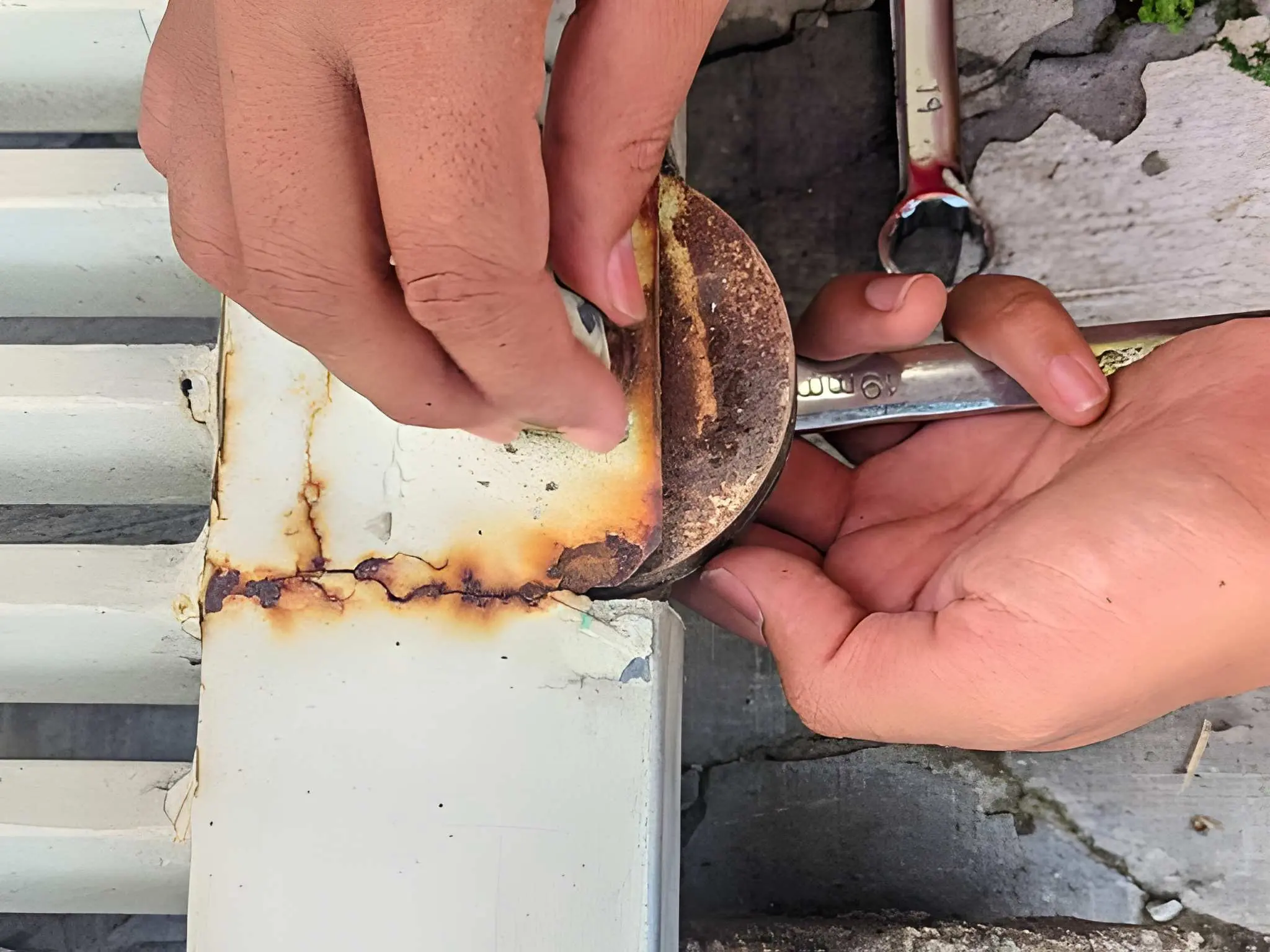
You’re cleaning the bathroom, half on autopilot, when you notice a faint orange ring forming around the base of the tap. It’s small, but it ruins that ‘just cleaned’ feeling.
But with a few simple household fixes or the right commercial products, you can deal with rust early and keep your fixtures in tip-top shape. Want to stay ahead of corrosion without replacing half your fittings? Keep reading.
Know Your Enemy: Rust 101
Before we roll up our sleeves, it helps to understand what you’re actually fighting.
When iron meets water and oxygen, it forms iron oxide—that reddish-brown discolouration you’ve probably seen on your taps, pipes, or tools. Over time, it eats away at the metal, leaving it weaker.
Anywhere humidity tends to linger is basically a playground for rust. The more often metal gets wet, the faster it will corrode. So, your sinks, bathroom taps, shower fittings, or even the pipes under your kitchen sink are the usual problem spots.
Luckily, rust doesn’t usually come out of nowhere. Early signs are easy to spot if you keep an eye out: small specks, rough patches, or that faint orange haze along the edges and seams.
In short, rust is predictable, manageable, and doesn’t have to ruin your day or your metal fixtures. And the better you understand it, the faster you can act when it pops up.
Size Up the Damage
Now that you know what rust is and where it likes to hide, it’s time to take a closer look at your fixtures.
Start by examining the metal closely. Small, reddish-brown specks usually mean minor surface rust, which is manageable with a bit of elbow grease or a simple home remedy. But if you spot pits, deep grooves, or even tiny holes, the situation is more serious.
For those bigger problems, professional cleaning services are a good option. They’ll advise whether cleaning the rust is possible or if replacement is the smarter move.
Here’s a little trick: gently prod rusted areas with something like a screwdriver. If the metal crumbles under light pressure, it’s beyond simple fixes. At that point, you know it’s time to consider replacement instead of risking more damage.
Try DIY Removal Techniques
Now comes the fun part—rolling up your sleeves and getting rid of rust. And chances are that you already have most of what you need at home.
One of the easiest methods is a simple baking soda paste. Mix the powder with a little water to make a thick, spreadable paste, then cover the rusty area and leave it for 60 minutes. After that, grab a brush, scrub gently, and rinse it clean.
Vinegar is another effective option. Its acidity helps break down rust like magic. For smaller items, a quick soak in a diluted vinegar solution works wonders.
Larger fixtures? No problem! Soak a cloth in vinegar, wrap it around the rusty patch, let it sit for 15 minutes, then scrub and rinse.
Lemon juice and salt also make a surprisingly effective team. Sprinkle some salt onto the rusty spot, squeeze lemon juice over it, wait a couple of hours, and then wipe it off.
The natural acids in the citrus get to work without harming your fixtures, and as a bonus, lemon smells a lot nicer than chemicals.
Explore Commercial Products
Sometimes, DIY just won’t cut it, but that doesn’t mean you should give up. There are plenty of commercial rust removers designed to tackle stubborn corrosion with minimal effort.
Gels are brilliant for vertical surfaces because they stick where you need them instead of dripping everywhere and creating a mini rust river on your floor.
Sprays, on the other hand, are ideal for covering larger areas quickly. As for wipes, they’re perfect for small fittings or tricky corners.
When picking a product, think about the material you’re treating and the severity of the rust. Some formulations are specially made for stainless steel or delicate finishes, so you don’t end up fixing one problem while accidentally creating another.
And don’t forget safety. Follow the manufacturer’s instructions, and consider environmental conditions, as extreme heat, direct sunlight, or damp areas can affect performance.
If eco-friendliness matters to you (and it should), look for biodegradable or non-toxic options. They do the job without leaving behind harsh chemical residues, which makes them a great choice if you’ve got kids, pets, or just prefer to keep your home on the greener side.
Prevent Future Rust Issues
Cleaning up rust is one thing, but stopping it from coming back? That’s where the real magic happens. With a few simple steps, you can protect your metal fixtures and keep them looking great long-term.
Apply a Protective Coating
A sealant is like an invisible armour for your fixtures. It blocks moisture, prevents minor scratches, and slows down the slow creep of corrosion.
If water no longer beads on your taps or hinges, it’s probably time for a fresh coat. You can apply these coatings easily with a brush or spray bottle, covering the entire surface.
Bonus: you’ll enjoy that satisfying ‘just-treated’ sheen every time you glance at your fixture.
Keep Fixtures Dry
Moisture is rust’s best friend. So, after cleaning or using a sink, shower, or bathroom, make it a habit to wipe down any metal parts with a dry cloth.
Even a few seconds to remove leftover water can prevent tiny rust spots from forming. In humid areas, run an extractor fan or open a window.
Regularly Check for Early Signs
A quick glance at your fixtures once a month can save you hours later. Look for tiny orange specks, dull patches, or rough edges around taps, showerheads, and exposed pipes.
If you catch rust early, you can deal with it before it spreads or eats into the metal.
Avoid Harsh Chemicals and Abrasives
Strong cleaners, steel wool, or scrubbing pads can strip protective coatings and leave your metal vulnerable.
So, stick to metal-friendly cleaners or gentle DIY solutions, like vinegar or baking soda. Remember, using harsh products might remove surface rust in the short term, but it often leads to bigger problems later.
Conclusion
Now is the perfect time to grab a cloth, some vinegar, or your favourite rust remover and show rust the door. Even a tiny effort turns into noticeable results, and nothing beats that moment when your taps gleam like new.
Keep at it, and you’ll find yourself checking your taps and pipes with pride instead of dread.
Also Read-How Safer Roads and Smart Tech Are Changing the Car Accident Landscape

