


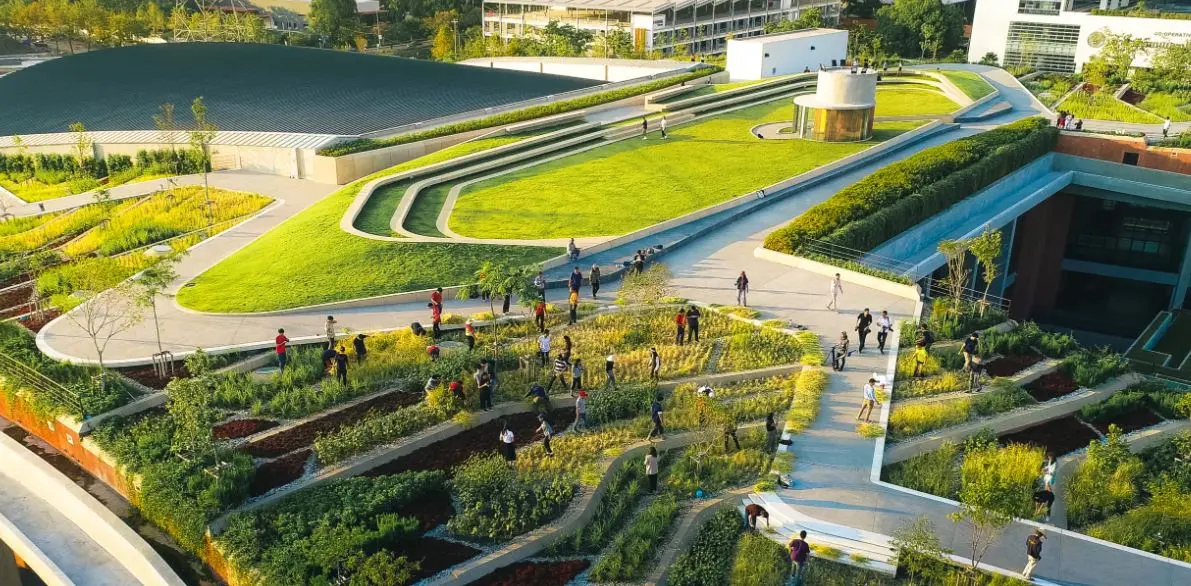
Urbanisation has ushered in an era of architectural innovation aimed at harmonising human habitation with environmental conservation. Central to these efforts is the integration of nature within urban developments through green architecture, a practice that encompasses sustainable building design and the incorporation of green spaces in urban settings. At the forefront of this movement is VersiScape, an innovative green infrastructure system designed to revolutionise the way cities interact with their natural environments.
Understanding Green Architecture
Green architecture is an approach to building that seeks to minimise the negative environmental impact of constructions by enhancing efficiency and moderation in the use of materials, energy, and development space. Ecologically sustainable materials, energy-efficient systems, and space-conserving designs constitute the bedrock on which green architecture stands. With a growing awareness of climate change and environmental degradation, architects and city planners are increasingly adopting green principles to create healthier, more sustainable urban spaces.
The Role of Green Infrastructure in Urban Designs
In the pursuit of sustainable urban environments, green infrastructure plays a pivotal role. It refers to an interconnected network of natural and semi-natural spaces, including parks, green roofs, and landscaped areas, that together address urban challenges such as air pollution, stormwater management, and the urban heat island effect. Green infrastructure not only contributes to environmental health but also enhances the quality of life for city dwellers by providing natural respite amid concrete landscapes.
Introducing VersiScape: The Pioneering Solution
VersiScape is exemplifying this new age of urban green infrastructure with its innovative systems designed to incorporate living green walls and vertical gardens in urban structures. These installations are not just aesthetically pleasing but are functional features that contribute to the thermal regulation of buildings, the reduction of noise pollution, and improved air quality through natural filtration. VersiScape is at the heart of transforming urban landscapes by providing practical and efficient green architecture solutions.
VersiScape and Green Architecture Symbiosis
The integration of systems like VersiScape into urban buildings reflects the symbiotic relationship between innovative green solutions and modern architecture. As cities become denser, the conventional horizontal expansion of green spaces becomes increasingly difficult. VersiScape addresses this challenge by enabling vertical real estate to double up as living, breathing greenery. The installation of such systems on buildings’ exteriors can effectively reintroduce nature into urban settings with limited available ground space.
The Multifaceted Benefits of Green Walls
Green walls, such as those made possible by the VersiScape system, deliver a multitude of benefits that extend beyond environmental considerations. They present a visually compelling aspect of green design, with the power to soften the hard edges of urban environments and provide a pleasant aesthetic for local communities. On a functional level, green walls can significantly improve thermal insulation, leading to reduced energy costs for heating or cooling indoors. Additionally, they contribute to urban biodiversity by providing habitats for a variety of insects and birds, creating miniature ecosystems within the cityscapes.
Energy Efficiency and Cost Savings
A core principle of green architecture is energy efficiency, and VersiScape installations play a critical role in achieving this goal. By adding an extra layer of vegetation, green walls act as natural insulation, maintaining internal building temperatures at comfortable levels. As a result, the demand for artificial heating and cooling systems decreases, leading to lower energy consumption and substantial cost savings in the long term. This advantage underscores the economic viability of integrating green architectural elements into urban developments.
Improved Urban Air Quality
Pollution is a persistent problem in cities, and green walls can be part of the solution. Plants in green wall systems actively purify the air by absorbing pollutants and emitting oxygen. This process enhances the air quality and can have positive health benefits for the city residents, including reduced incidence rates of respiratory diseases. By expanding the application of green architectural solutions like VersiScape, the overall air quality in urban environments can be significantly improved.
Acoustic Benefits and Noise Reduction
Another often overlooked advantage of green walls is their ability to dampen urban noise. Dense vegetation naturally absorbs and reflects sound, leading to quieter, more serene urban spaces. This acoustic benefit is vital in bustling cities where noise pollution can be a source of constant distraction and stress. Incorporating green infrastructure like VersiScape can contribute greatly to noise reduction, providing a more tranquil urban atmosphere.
Enhancing Urban Aesthetics and Wellbeing
The presence of greenery in urban areas positively impacts aesthetics and the wellbeing of residents. Numerous studies have shown that access to natural elements contributes to psychological health, reduces stress levels, and improves overall wellbeing. Green architecture, with solutions like VersiScape, aims at creating more liveable and inviting urban spaces where nature and architecture coexist in harmony for the benefit of the community.
Sustainability and Longevity
Yet another crucial aspect of green walls is their sustainability and potential to endure as long-term features of the urban topography. Systems like VersiScape are designed with durability and low maintenance in mind, making green architecture a practical and efficient choice for city planning. These enduring qualities ensure that the integration of green spaces into urban landscapes is not just a fleeting trend but a sustainable, future-proof approach.
Challenges and Future Directions
Despite the compelling case for the widespread adoption of green architecture, challenges remain. The initial cost of implementing systems like VersiScape can be a barrier for some developers. However, the long-term benefits and operational savings can offset such upfront investments. Furthermore, with climate change urging a rapid response, the future trajectory for urban design must involve innovative green solutions that can adapt and thrive within the changing environmental conditions.
The Future of Green Architecture
As green architecture continues to evolve, systems such as VersiScape will play an increasingly integral role in shaping urban environments that are not only sustainable but truly rejuvenating. The potential of green architecture to transform urban landscapes is immense, with VersiScape at the forefront of this revolution. By embracing these green infrastructure systems, cities can become more resilient, healthier, and aesthetically appealing—setting a new standard for what it means to build in harmony with nature.
In conclusion, green architecture epitomised by VersiScape offers transformative potential for urban landscapes. By redefining our approach to city planning and construction, and prioritising the integration of natural elements, we embark on a path to building a future where urban environments foster both human prosperity and ecological resilience.
Also Read-The Influence of Browsers in Modern Technology

