


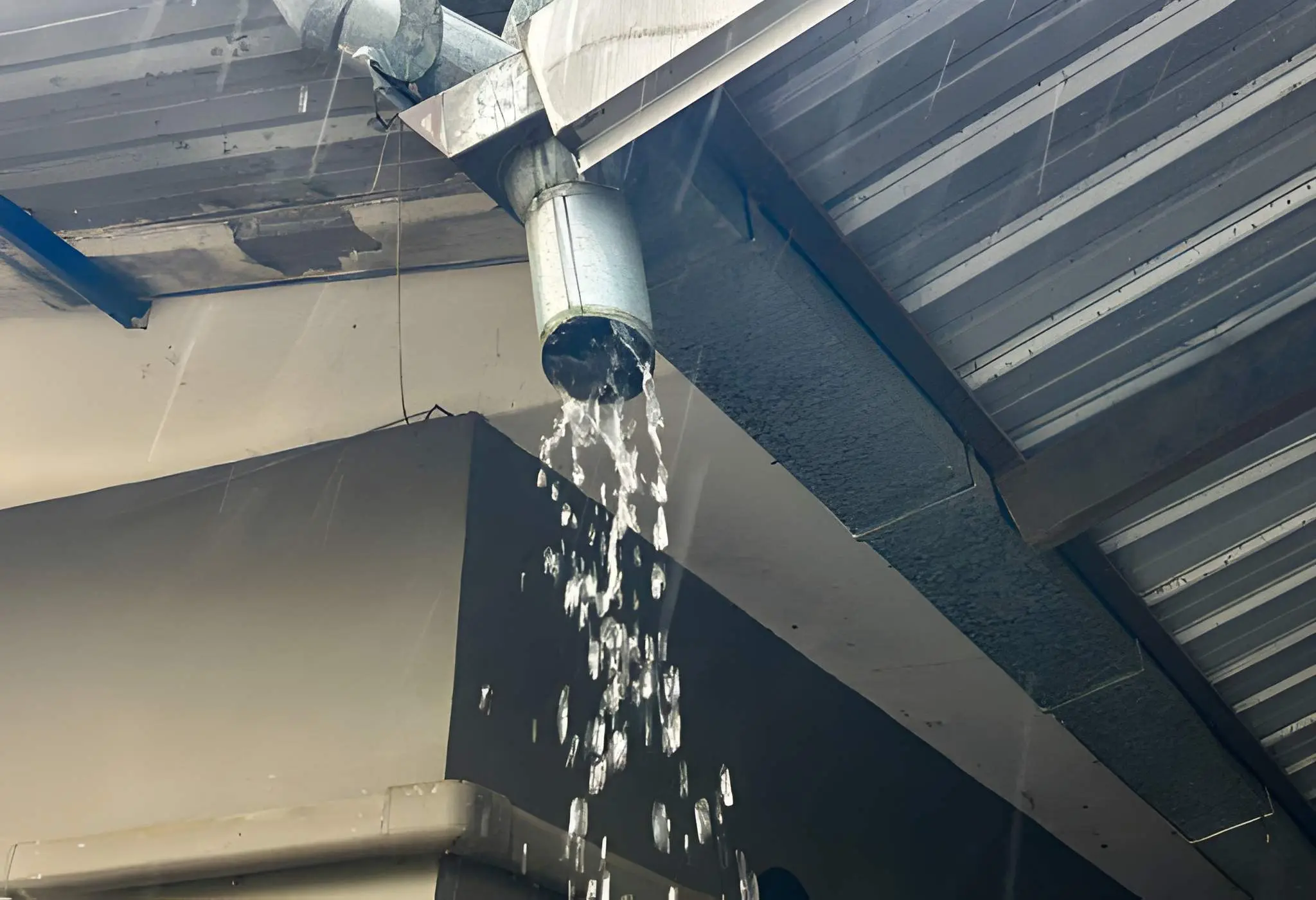
Seeing water on your roof or dripping near your ceiling after running an evaporative cooler can be worrying, especially if the system is relatively new. Some water discharge is a normal part of how evaporative systems work, but there is a clear line between expected drainage and a leak that signals a fault. Understanding that difference helps homeowners act early and avoid costly damage.
Evaporative coolers rely on water to cool air, so moisture is always involved. However, that water should be carefully controlled and directed away through proper drainage. When it isn’t, the problem usually lies in maintenance or internal components rather than normal operation.
What’s Considered Normal Water Discharge
During regular operation, evaporative units use water to saturate cooling pads. Excess water is flushed out to prevent mineral buildup. This purge cycle often releases water through a drain line, especially at startup or shutdown. When this water exits through the correct outlet and doesn’t spread across the roof or ceiling, it’s considered normal.
In hot weather, you may notice slightly more discharge due to increased water use. As long as the water flows briefly and stops, and there’s no sign of pooling or seepage into the roof structure, the system is functioning as intended.
When Leaking Becomes a Problem
Leaks become a concern when water appears in places it shouldn’t, such as ceiling stains, damp insulation, or water running across roof tiles. These issues usually point to a fault rather than standard operation.
Blocked drain lines are one of the most common causes. Dust, leaves, and mineral deposits can prevent water from exiting correctly, forcing it to overflow inside the unit. Cracked or rusted water trays can also allow water to escape continuously.
Another frequent issue is a faulty float valve, which can overfill the system and cause constant leakage. Unlike normal discharge, these leaks don’t stop on their own and often worsen over time.
Why Roof Leaks Shouldn’t Be Ignored
Even a small, slow leak can cause serious damage if left unchecked. Roof structures are not designed for constant moisture, and prolonged exposure can weaken timber, stain ceilings, and damage insulation. Over time, this creates ideal conditions for mould growth, which can affect indoor air quality.
There’s also an electrical risk. Evaporative systems involve electrical components, and water intrusion increases the chance of short circuits or system failure. What begins as a minor drip can quickly turn into a safety hazard and an expensive repair.
The Role of Professional Diagnosis
Because evaporative systems sit on the roof and integrate plumbing, drainage, and electrical parts, identifying the exact cause of a leak isn’t always straightforward. Specialists in evaporative air conditioning Adelaide are trained to inspect trays, drains, valves, and roof penetrations to determine whether water discharge is normal or problematic.
Professional servicing ensures that worn components are replaced, drains are cleared, and the system is balanced correctly. It also helps identify roof-related issues around the unit, such as deteriorated seals or flashing, which can worsen water intrusion even if the unit itself is working properly.
Preventing Future Water Issues
Regular maintenance is the most effective way to prevent leaks. Seasonal servicing before summer ensures drains are clear, pads are clean, and water levels are correctly regulated. Addressing minor issues early helps avoid overflow and roof damage later.
Homeowners should also keep an eye out for warning signs, such as unusual water sounds, reduced cooling performance, or damp patches near ceiling vents. These clues often appear before visible leaks and signal the need for professional attention.
Conclusion
Addressing evaporative unit leaks early protects both your home and your cooling system. Knowing what’s normal and what isn’t helps you respond quickly, avoid unnecessary damage, and keep your system running efficiently throughout the warmer months.
FAQs
Is any water coming from my evaporative cooler normal?
Yes, brief water discharge during purge cycles is normal. Continuous dripping or roof pooling is not
Can a blocked drain really cause ceiling damage?
Yes, blocked drains can force water to overflow into roof cavities, leading to stains, mould, and timber damage
Will the leak stop on its own?
Fault-related leaks usually worsen over time. They rarely resolve without repair.
Is it safe to keep using the system if it’s leaking?
It’s not recommended, as ongoing leaks increase structural and electrical risks.
Who should inspect a leaking rooftop unit?
Qualified Evaporative air conditioning Adelaide professionals are best equipped to diagnose and fix rooftop unit leaks.
Also Read
- How Data and Technology Are Transforming the Role of Commercial Real Estate Brokers
- How To Find The Best Business Software And Services For Your Company
- Understanding Ethos Term Life Quotes: Pricing by Age and Coverage Options

