


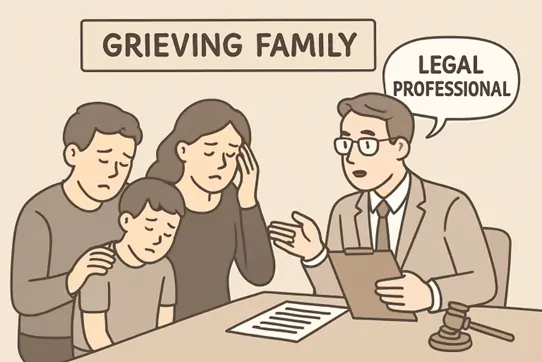
Losing a loved one because of another party’s negligence or wrongdoing leaves families devastated and searching for answers. During such times, understanding how wrongful death claims work is vital for those seeking justice and compensation. Families dealing with this difficult journey can begin exploring their rights and options with help from this website. Knowing who may file a claim and what damages are recoverable provides guidance and hope for holding liable parties accountable.
Wrongful death laws serve to protect family members by offering a path to financial and emotional recovery. These statutes recognize the extraordinary losses caused by preventable deaths. The ability to pursue damages can ease the burden of funeral expenses, lost income, and emotional suffering, helping loved ones rebuild their lives. Even though every state has unique rules, most allow certain relatives or estate representatives to take legal action on behalf of the family. Working with a legal team experienced in wrongful death cases is often essential, given the complexity of these cases and the state-specific requirements involved.
Who Can File a Wrongful Death Claim?
Eligibility to file a wrongful death claim is determined by state statutes, but some common standards apply nationwide. Typically, the claims are brought either by close relatives of the deceased or by a representative empowered to act on behalf of the estate. Immediate family members, such as spouses, children, or parents of unmarried children, are usually the first in line in most jurisdictions. An extended family member may also be eligible if they were financially dependent on the decedent, though this is uncommon outside a few states. In some places, siblings or grandparents who relied on the victim for support may also qualify.
In several states, the law requires the estate’s personal representative, sometimes known as the executor, to file the wrongful death action. For instance, in Florida, the personal representative brings the claim, but all qualifying beneficiaries (the surviving spouse, children, parents, and dependents) share in any awarded damages. Understanding these distinctions is key, as who files a claim can affect both the legal process and the distribution of any compensation.
Types of Damages Available
The primary aim of damages in wrongful death cases is to compensate the surviving family or dependents for tangible and intangible losses resulting from the death. These damages are typically grouped into economic, non-economic, and, in certain scenarios, punitive categories.
Economic Damages
- Medical Expenses:These include hospital bills and treatment costs incurred from the time of injury until death.
- Funeral and Burial Costs:Expenses related to memorial services or interment are recoverable because they are a direct financial burden on survivors.
- Loss of Income:This covers the decedent’s future expected earnings that would have supported the family, including lost wages and potential benefits like retirement contributions.
- Loss of Benefits:Health insurance, pension plans, and other benefits provided by the deceased also factor into economic damages.
Non-Economic Damages
- Pain and Suffering:While not easily quantifiable, the emotional anguish and mental distress suffered by family members are compensable.
- Loss of Companionship:This refers to the loss of love, support, affection, and care that the deceased provided.
- Loss of Guidance:Especially significant for minor children, who will no longer benefit from a parent’s mentorship or direction.
Punitive Damages
Sometimes, courts also award punitive damages, which are not intended to compensate the victim but to punish especially harmful conduct and deter similar future actions. The rules for seeking punitive damages vary, and some states do not allow them at all in wrongful death cases.
State-Specific Considerations
Because wrongful death statutes are written at the state level, important details differ from one jurisdiction to another. In Texas, for instance, only the surviving spouse, children, and parents of the deceased are authorized to file a claim. If none of these parties take action within three months after the person’s death, the estate’s representative can pursue the claim as long as eligible survivors do not object. Elsewhere, such as California, siblings and other dependents might have standing if there is no surviving spouse or child. Reviewing the rules in your specific state or speaking with a wrongful death attorney is critical to ensuring eligibility and understanding the process.
Statute of Limitations
Time is of the essence in wrongful death matters. Known as the statute of limitations, each state sets a limit on how long survivors or estate representatives may wait before initiating a claim. This period typically ranges from 1 to 3 years, counting from the date of death. Failing to file suit before this deadline generally means the courts will refuse to consider the case, leaving families without legal recourse.
Conclusion
Wrongful death claims serve as a crucial means for grieving families to pursue justice and compensation for losses both practical and profound. Eligibility and the specific damages available depend upon state law, so a thorough understanding of local statutes is vital. The process can be complicated, and strict deadlines must be met. For these reasons, connecting with a legal professional experienced in wrongful death cases is strongly advised, providing the support necessary to navigate an emotionally and legally demanding process.
Read more: What to Expect at Your First Court Appearance After an Arrest – Dimensions Script
How to Choose the Right Wide-Format Media for Every Marketing Project – Dimensions Script
Are Dental Implants Right for You? Pros, Cons, and Considerations – Dimensions Script

