


Choosing the best and affordable trampolines might be difficult. You could be asking yourself, “Is this trampoline truly the correct size for my youngster, my teenager, or even me?” Furthermore, picking the wrong size could lead to mishaps, a wasted trampoline, and waste of money. This makes understanding the trampoline size chart essential.
With over 10 years in the trampoline industry, we’ve seen many families struggle to find the best trampolines for them and their families. In this guide, we’ll walk you through how to pick the perfect trampoline for everyone, from the toddlers who are discovering their first bounce, to teenagers learning new tricks, to adults looking for fitness with fun. You’ll get tips, age-based size recommendations, and expert insights that will help you make the right decision, which is simple, safe, and a perfect fit for your space.
By the end of this blog, you’ll have the clarity you need to choose a trampoline that fits your space, matches your family’s needs, and keeps everyone bouncing safely for years.
Why Understanding the Trampoline Size Chart Matters
Choosing the right garden trampoline size isn’t only about fitting it into your garden. The right size affects safety, performance, and the amount of bounce everyone is getting. Let’s break down why this matters.
1. Every Trampoline Has a Different Bounce Capacity
Trampoline size is directly linked to bounce quality and weight limit. A smaller trampoline for a teenager or adult may feel stiff, limiting jumps and tricks, while a larger rectangle trampoline for a young child can be unsafe. Matching size to the user makes sure a balanced bounce, safe landings, and better balance.
Tip: Always check the manufacturer’s weight recommendations and match them with the intended users.
2. Prevent Injuries
Using a trampoline that is too small increases the likelihood of accidents. For instance, an in ground trampoline may not safely support a 13-year-old attempting flips, leading to falls or twisted ankles. Selecting the right size for age and skill reduces injuries and helps users gain confidence safely.
Tip: Supervise younger users and ensure proper spacing around the trampoline.
3. Maximise Durability
Inappropriate leaps or excessive trampoline weights can damage springs and mats, hastening wear and tear. Picking the right trampoline size protects the frame, extends lifespan, and saves money in the long run.
Tip: Consider investing slightly more in premium materials to increase longevity.
4. Allow Skill Building
A trampoline, according to the user’s age and size, encourages right use, correct bounce, and safe play. Children can practice basic jumps safely, teens can try coordinated tricks, and adults can use it for workouts. The right size allows progressive skill development without frustration.
Tip: Start with basic jumps before moving to advanced techniques to build coordination and confidence.
5. Provide Lasting Fun
Trampolines that match the user’s needs are the perfect fit. If you are using a mini trampoline, then it’s not at all the right size for flips and tricks. Too large for younger children is not at all safe for them. Correct sizing ensures all family members enjoy bouncing, making it a long-term source of fun and activity.
It doesn’t have to be difficult to choose the appropriate trampoline size. Understanding the trampoline size chart ensures safety, durability, and enjoyment for everyone in your household.
Next, we’ll look at key safety considerations to keep in mind before buying a trampoline, so you can make the most informed choice.
Key Safety Considerations
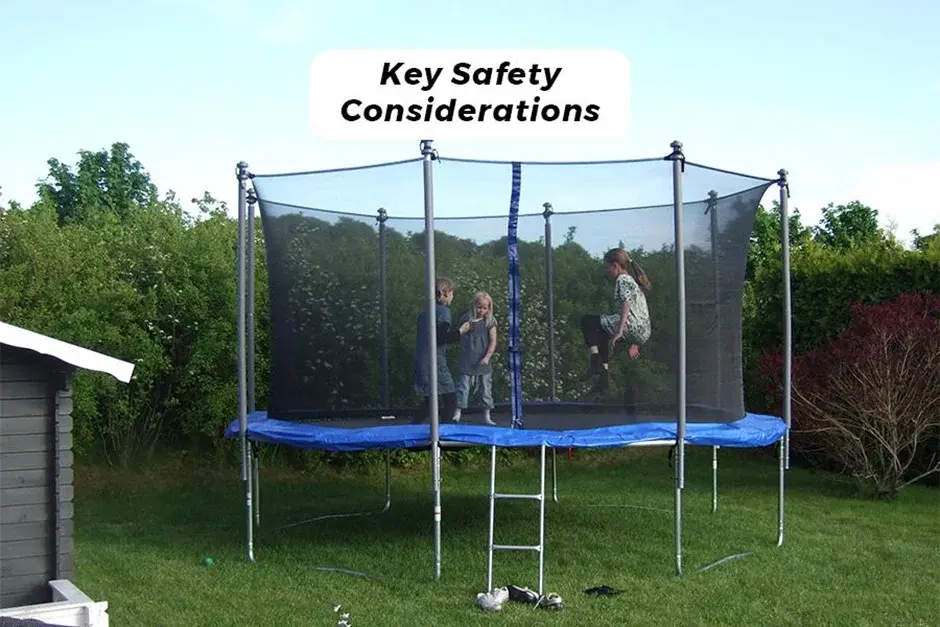
Considering safety before choosing the appropriate trampoline sizes is always like “precaution is better than cure”. The right trampoline should not only fit your garden but also protect the people who are using it. Here are the key points you need to consider.
1. Consider the Space
Remember you will require more space for a trampoline than its actual frame size. Always leave at least 2–3 feet of clear space around it to prevent accidents. In the UK, many gardens are compact, so measure carefully before making any decision.
Tip: Avoid placing trampolines near walls, fences, or trees.
2. Number of Users
One of the most frequent causes of trampoline injuries is multiple users using it simultaneously without understanding its weight capacity. Even if the 14ft trampoline is large, it’s safer to let one user bounce at a time. If you want the trampoline to be used by multiple users, choose a size that comfortably supports the weight and also set clear rules.
3. Age and Weight Limit of the User
Manufacturers always specify age and weight limits for a reason, and ignoring them puts strain on the springs and mat, increasing the chances of accidents. Always match the trampoline to the heaviest and most frequent user.
4. Go for Premium Quality
Cheaper trampolines might look like the best options financially, but they wear out quickly. Premium models use stronger frames, rust-resistant springs, and high-quality mats which turn your garden into a wonderland for your children. Over time, investing in better quality actually saves money on repairs and replacements.
5. Testing Certificate
In the UK, always go for trampolines which are tested and recognised for safety standards. A certified product ensures it has been checked for durability and stability. This extra reassurance is especially important if children will be the main users.
7. Tension of Spring
Trampoline Springs tension affects bounce height and comfort of the users. Softer springs are gentler for younger children, while tighter springs suit teens and adults looking for a stronger lift. Choosing the right tension keeps the trampoline safe and enjoyable for the intended user.
Keeping these safety factors in mind helps you narrow down your options before you even look at the trampoline size chart. In the next section, we’ll break down trampoline sizes by age, giving you a clear guide to match each trampoline to the right user.
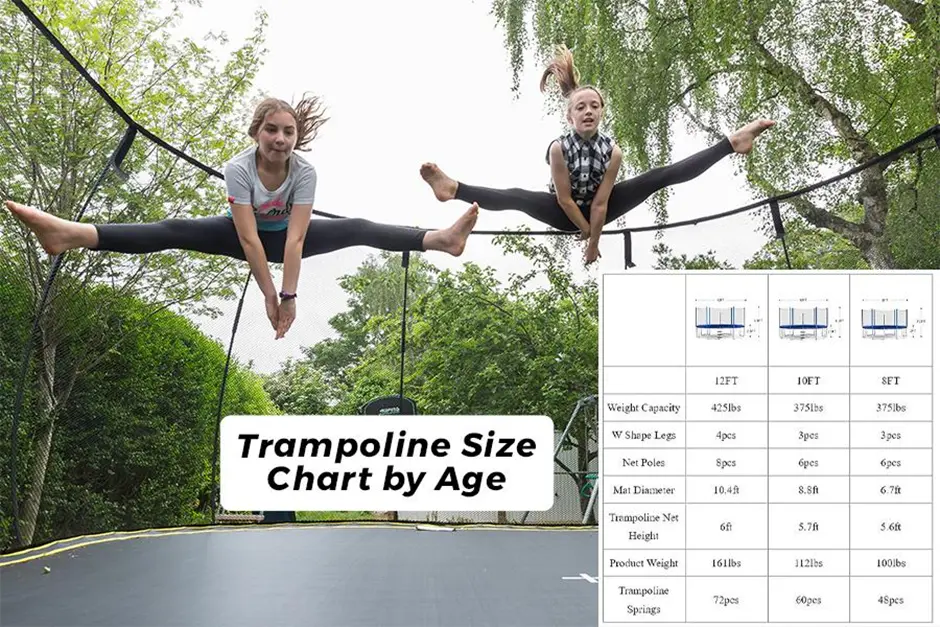
Trampoline Size Chart by Age
Size isn’t the only consideration when selecting a trampoline; safety, comfort, and ensuring that the whole family can enjoy it are other important factors. Below is a trampoline size chart by age, tailored for UK households, to help you pick the right fit.
Children (3–6 years)
- Trampoline Type – Playground trampoline
- Size Range – 4ft – 6ft
- Notes – Low bounce, safe for toddlers
Early School Years (6–10)
- Trampoline Type – Small to mid-size trampoline
- Size Range – 6ft – 10ft
- Notes – Balance fun and safety
Teenagers (11–17)
- Trampoline Type – Mid to large trampoline
- Size Range – 10ft – 12ft
- Notes – Allows skill development
Adults (18+)
- Trampoline Type – Large trampoline
- Size Range – 10ft – 14ft
- Notes – Supports higher weight and stability
How to Use the Chart for Your Household
If you have a mix of ages at home, consider the largest user first. For example, if you have teenagers and younger kids, a 10ft – 12ft trampoline will give enough bounce for older children while staying safe for younger ones under supervision.
Safety Comes First
Every size recommendation is linked to bounce control and stability. A smaller trampoline keeps toddlers safe, while a larger one prevents overcrowding when multiple users jump. Before making a purchase, always make sure to check the manufacturer’s weight limit and prioritize using trampoline socks.
Balancing Fun with Practicality
The trampoline should be appropriate for the size of your yard space and your child’s age. For smaller UK gardens, a 6ft–8ft trampoline can work well for kids. Larger gardens can accommodate 12ft–14ft trampolines, giving teenagers and adults more room for movement and tricks.
Durability Considerations
Investing in the right size also means better value for money. A trampoline that suits both current and future needs (for example, kids growing into their teens) will last longer and prevent the need for early replacement. Look for strong frames and weatherproof nets for UK conditions.
Quick Tips for Families in the UK
- Always buy with the oldest child or heaviest user in mind.
- Consider garden size and storage space before finalising.
- Use safety enclosures, padding, and trampoline spares regardless of age group.
- For fitness use, rebounders are best for adults and seniors.
With the right trampoline size in place, you create a safer and more enjoyable jumping environment.
Conclusion
Throughout this guide, we have seen how a trampoline size chart plays a crucial role in making the right choice. From checking the available space to considering the number of users, age limits, and safety standards, every factor directly affects both enjoyment and long-term durability.
By taking the time to measure your space and match the trampoline size to your family’s needs, you reduce risks and ensure everyone bounces safely. Remember, a trampoline is not just about fun it is an investment in health, activity, and shared moments.
So, don’t rush the decision. Use the trampoline size chart as your go-to guide, weigh your options carefully, and choose a model that balances safety with comfort. Take the next step today: measure your space, understand your users, and choose the right trampoline for years of safe fun.
Also Read-From Code to Customer: Building Awareness in Technical Markets

