


A motorcycle collision can leave a rider facing medical treatment, missed work, damaged gear, and difficult questions about fault. Whether a helmet was worn may become part of the insurance discussion, but it does not automatically decide who caused the crash or whether an injured rider has a claim. After a serious collision, speaking with a motorcycle accident lawyer near me can help a rider understand how the facts, injuries, insurance coverage, and Nevada law may affect the next steps.
Nevada requires most motorcycle riders and passengers to wear approved protective headgear. Still, a helmet issue must be considered alongside the full circumstances of the crash, including the other driver’s conduct, road conditions, witness accounts, medical evidence, and the specific injuries involved. A traffic-law violation and civil liability are related issues, but they are not the same thing.
What Nevada’s Motorcycle Helmet Law Requires
Under Nevada’s motorcycle protective-gear statute, the driver and passenger of a motorcycle or moped being operated on a highway generally must wear securely fastened protective headgear that meets the required standards. Riders and passengers must also use protective glasses, goggles, or a face shield unless the motorcycle is equipped with a qualifying transparent windscreen.
The rule applies to more than the person operating the motorcycle. A passenger who chooses not to wear a helmet may also face the consequences of a citation and may encounter questions from an insurer after a crash. Nevada recognizes limited exceptions, including certain enclosed-cab three-wheel vehicles and authorized parades. Those exceptions are narrow, so riders should not assume that a three-wheeled vehicle is automatically exempt.
A Helmet Violation Does Not Automatically Prove Crash Fault
In many motorcycle injury claims, the first issue is how the collision happened. For example, a driver may have turned left across a rider’s path, changed lanes without checking a blind spot, followed too closely, or failed to yield at an intersection. A rider’s lack of a helmet does not, by itself, explain why another motorist entered the rider’s lane or violated the rider’s right of way.
Insurance adjusters may nevertheless focus on a helmet violation because it can shift attention away from the other driver’s conduct and toward the rider’s injuries. That approach should be examined carefully. The central questions are whether the other party acted negligently, whether that conduct caused the collision, and whether the rider’s helmet use or nonuse actually contributed to a particular injury.
Crash Causation and Injury Causation Are Different Questions
A helmet is most likely to be discussed in connection with the severity of a head, facial, or traumatic brain injury. It is usually less connected to injuries such as a fractured leg caused by a side impact, a crushed hand, road rash, or damage to the motorcycle itself. A party arguing that helmet nonuse affected damages generally needs more than a broad statement that helmets are protective. The facts must connect the absence of a helmet to the particular harm claimed.
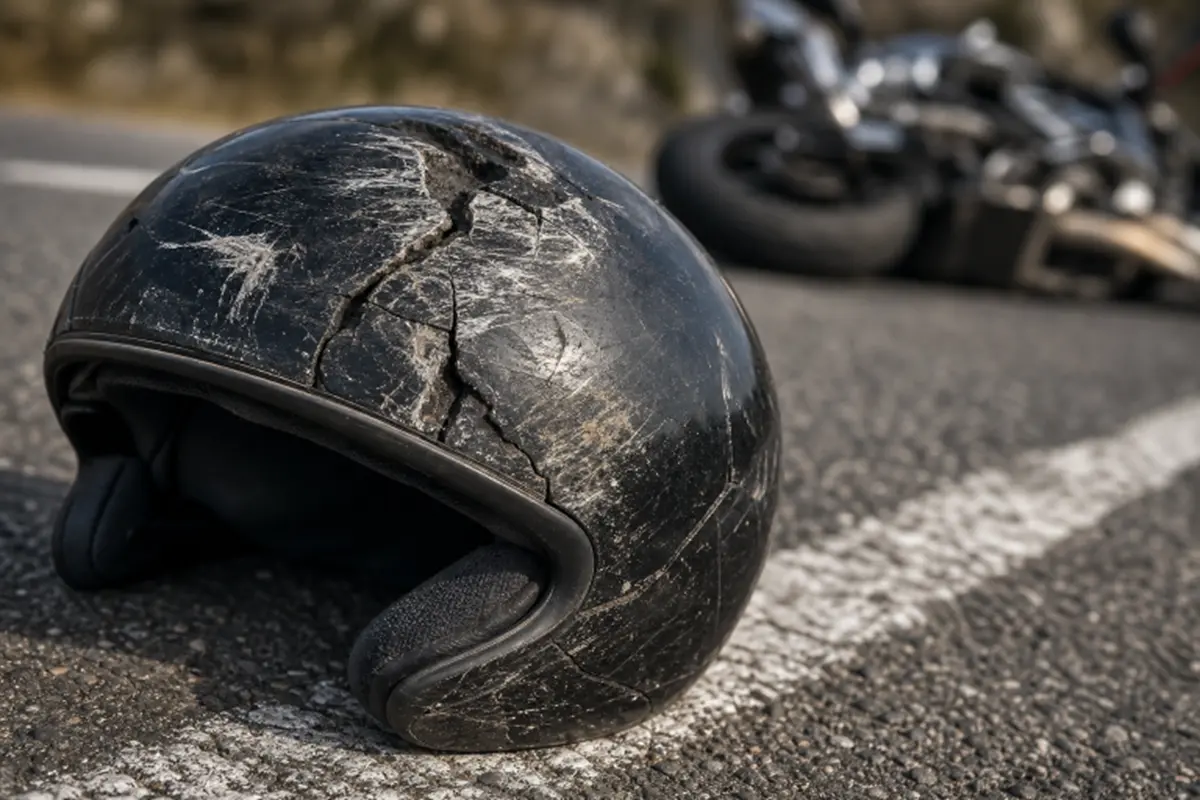
Medical records, imaging, physician opinions, photographs, helmet damage, and accident-reconstruction evidence may all be relevant. The condition of the helmet matters too. A rider who wore a properly secured helmet should preserve it, even if it appears cracked, scraped, or unusable after the wreck. It can help show that protective gear was worn and may provide information about the force and location of an impact.
How Comparative Negligence May Affect Recovery
Nevada uses a comparative-negligence system for many personal injury cases. Under Nevada law, an injured person may recover damages if that person’s negligence is not greater than the negligence of the party or parties being sued. Any percentage of fault assigned to the injured person can reduce the recoverable damages.
That rule does not mean that every helmet-law violation results in a percentage reduction. The evidence must support an argument that the rider’s conduct was legally relevant and contributed to the harm at issue. A rider may be cited for failing to wear a helmet, yet still have a strong claim that another driver caused the collision. Conversely, a helmet dispute can become more significant when a claim seeks substantial compensation for head or brain injuries.
What Insurers May Look For After a Motorcycle Crash
An insurer may request the police report, photographs, medical records, witness statements, and information about the rider’s gear. It may ask whether a helmet was worn, whether it fit correctly, and whether it met required standards. Riders should answer factual questions honestly, but they should avoid guessing about the crash, the cause of an injury, or the long-term medical outcome before doctors have completed an evaluation.
Do not discard damaged equipment just because it cannot be used again. Keep the helmet, jacket, gloves, boots, and riding pants in a safe place. Take clear photographs before cleaning or repairing anything. Also save purchase receipts, towing invoices, repair estimates, emergency-room paperwork, follow-up records, prescriptions, and documentation of missed work.
Steps That Can Help Protect an Injury Claim
- Seek prompt medical care and report all symptoms, including headaches, dizziness, memory problems, neck pain, numbness, anxiety, and sleep changes.
- Request a copy of the crash report and review it for factual errors when it becomes available.
- Photograph the motorcycle, helmet, other damaged gear, visible injuries, roadway markings, debris, and the surrounding intersection or roadway.
- Collect names and contact information for witnesses, and identify nearby businesses or homes that may have video footage.
- Keep a daily record of symptoms, appointments, medication, work limitations, and activities that have become difficult.
- Avoid posting opinions, videos, or details about the crash on social media while the claim is unresolved.
Common Questions About Helmets and Nevada Injury Claims
Can I still file a claim if I was not wearing a helmet?
Yes. The absence of a helmet does not automatically prevent an injured rider from bringing a claim against a negligent driver. Its effect depends on the evidence, the injuries claimed, and whether the other side can show a meaningful connection between helmet nonuse and the damages.
What if I were wearing a helmet but still suffered a brain injury?
A helmet can be important evidence of safety-conscious riding, but it cannot eliminate every risk in a high-force impact. Seek medical evaluation, preserve the helmet, and follow through with recommended care. Brain injuries may not be obvious immediately after a crash.
Does the helmet have to be new to comply with Nevada law?
The practical concern is whether the helmet meets applicable standards and was securely fastened. A damaged, altered, or severely aged helmet may raise questions about condition and protection. Replacing a helmet after a significant impact is generally wise, but the damaged one should be retained as evidence.
Conclusion
Nevada’s helmet law matters, but it is only one part of a motorcycle injury case. A rider’s failure to wear a helmet does not erase another driver’s duty to operate safely, yield when required, watch for motorcycles, and avoid preventable collisions. Careful medical treatment, preserved evidence, and a clear understanding of the difference between crash fault and injury severity can make a meaningful difference when pursuing a claim.
Also Read-How Technology Is Shaping the Features of Modern Cars

