


A parking lot or driveway does more than provide a place to drive and park. It shapes first impressions, directs traffic, supports deliveries, and creates walking routes for visitors, employees, tenants, and customers. Working with experienced providers of parking lot paving La Porte, IN, can help property owners evaluate current conditions and build a plan that fits the demands of the site. Maintenance is usually less disruptive and less costly than waiting for widespread failure. A narrow crack may allow water to enter the pavement system, soften the base, and eventually create potholes, rutting, or uneven areas. Thoughtful planning makes it easier to address damage at the right time rather than making rushed repairs after access or safety is compromised.
Why Pavement Planning Matters
Every paved surface has a job. A residential driveway may handle a few passenger vehicles each day, while a commercial lot may carry delivery trucks, service vehicles, employee traffic, and customer traffic. Pavement that looks acceptable from a distance may still have weak areas beneath the surface. Planning should consider how the property is used, where the heaviest traffic travels, and where water collects. Preventive work can include crack sealing, patching, drainage cleaning, restriping, and localized repairs. These steps can extend the pavement’s usable life when completed before the base is compromised. Public agencies also use preventive maintenance to manage costs, coordinate accessibility upgrades, and reduce avoidable deterioration over time.
How to Inspect a Parking Lot or Driveway
Walk the entire paved area at least twice a year, preferably in spring and fall. Repeat the inspection after major rainfall, prolonged freezing conditions, or unusually heavy traffic. Use a phone or camera to document the condition of each concern and compare the images over time.
Seasonal Inspection Checklist
- Look for potholes, loose aggregate, rutting, depressions, and sunken sections.
- Identify thin cracks, wide cracks, and web-like cracking patterns that may indicate deeper stress.
- Check for standing water after rain, especially near entrances, drains, curbs, and low points.
- Inspect pavement edges next to grass, sidewalks, utility covers, and concrete curbs.
- Confirm that parking lines, directional arrows, crosswalks, and accessible markings remain visible.
- Check sidewalks and transitions for uneven joints, abrupt changes in level, and trip hazards.
Simple Documentation Process
- Walk the property in daylight and photograph each issue from more than one angle.
- Mark problem locations on a basic site sketch or digital map.
- Note where trucks, buses, dumpsters, or heavy equipment routinely travel.
- Record whether the same section has needed repeated repairs.
The Role of Drainage and Grading
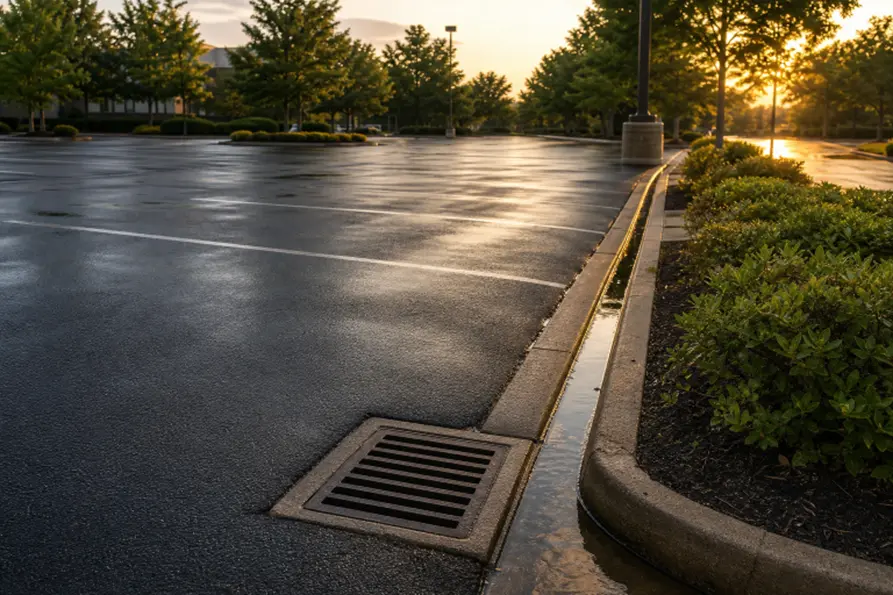
Water is one of the most persistent threats to pavement. When water sits on the surface or enters through cracks, it can weaken the supporting layers below. Poor grading can lead to puddles, soft edges, erosion, and premature base failure. A new asphalt surface alone will not correct a drainage problem that remains underneath or beside it. Property owners should keep catch basins clear, direct downspouts away from pavement edges, remove debris from drainage paths, and watch for erosion near curbs. For example, a freshly resurfaced lot may look smooth at first, but it can fail early if water stays trapped beneath the pavement or repeatedly flows across the same weak edge.
When to Repair, Resurface, or Replace
- Repair:Appropriate for isolated potholes, small failed areas, and limited cracking where the surrounding pavement remains stable.
- Resurfacing:Often useful when the pavement base is still sound, but the surface has widespread wear, fading, or shallow cracking.
- Replacement:May be necessary when the base has failed, drainage is poor, pavement moves under traffic, or patching has become repetitive.
Before selecting a solution, ask whether cracks are spreading through the pavement, whether water is reaching the base, and whether future traffic will be heavier. The least expensive option today is not always the best value if it leaves the cause of the damage unresolved.
Building a Simple Maintenance Plan
- Spring:Check for winter cracking, heaved edges, potholes, and drainage trouble.
- Summer:Repair cracks, address surface wear, control vegetation, and refresh faded markings.
- Fall:Clear leaves and debris from drains before heavy rain and freezing weather arrive.
- Winter:Monitor snow-removal practices and avoid unnecessary damage from sharp equipment or excessive chemical use.
Keep a file with inspection photos, invoices, repair dates, contractor recommendations, and notes about recurring problem areas. This record helps with budgeting and makes it easier to determine whether a repair is lasting as expected.
Safety, Lighting, and Accessibility
Pavement condition affects drivers, pedestrians, cyclists, and people using wheelchairs or other mobility devices. Clear markings help guide traffic and reduce confusion at entrances, loading areas, and crosswalks. Good lighting improves visibility around curbs, signs, walking paths, and changes in pavement level. Review curb ramps, accessible routes, parking spaces, signs, and sidewalk connections before construction begins. Accessibility requirements can vary by location and project type, so current local rules should be reviewed during the planning process rather than after the work is complete.
Pavement Choices and Stormwater Options
Traditional asphalt and concrete remain practical for many properties, but some sites may benefit from alternatives designed to manage rainfall and reduce the extent of solid surfaces. Options can include permeable pavement, porous concrete, reinforced aggregate, rain gardens, planted drainage zones, and smaller paved footprints where parking demand permits. These approaches involve trade-offs involving traffic loads, soil conditions, maintenance needs, cost, and local approvals, to address runoff and heat concerns. They are not a universal solution, but they can be worth evaluating for the right property.
How to Budget for Pavement Work
Separate urgent safety repairs from longer-term improvements. A written estimate should identify surface preparation, base work, drainage changes, materials, markings, cleanup, traffic control, access limitations, and warranty terms. Important cost factors include total square footage, soil stability, existing pavement condition, traffic weight, weather, and required accessibility features. Compare the cost of repeated patching to that of a planned resurfacing or replacement project. Setting aside maintenance funds each year can reduce the chance that a property will delay necessary work until pavement failure becomes severe.
Questions to Ask Before Work Begins
- What caused the current pavement damage?
- Will the contractor inspect the base before surface work begins?
- How will water move across and away from the site?
- What preparation and cleanup steps are included?
- How long will access be limited during construction?
- What maintenance will the completed pavement need?
- Which markings, signs, and access features must be restored?
Coordinating pavement repairs with sidewalk work, drainage improvements, and accessibility updates can prevent duplicated effort. A spring pavement maintenance program offers one public-sector example of how resurfacing, inspections, sidewalk repairs, and access improvements can be planned together.
Final Thoughts
Safe, durable pavement starts with regular inspections and sound planning. By tracking small defects, protecting drainage, matching repairs to the actual cause of damage, and preparing a realistic budget, property owners can make better decisions for safety, access, appearance, and long-term value. Routine maintenance helps identify cracks, potholes, surface wear, and drainage problems before they become larger structural issues that require costly repairs. Addressing problems early can extend pavement service life, reduce disruptions, and improve conditions for drivers, pedestrians, and visitors. A consistent maintenance strategy also supports more predictable budgeting, preserves curb appeal, and helps ensure that driveways, parking lots, and roadways continue to perform reliably despite changing weather conditions and everyday traffic.
Also Read-5 Benefits Of Consulting Services For Small Businesses When You’re Tired Of Figuring It Out Alone

