


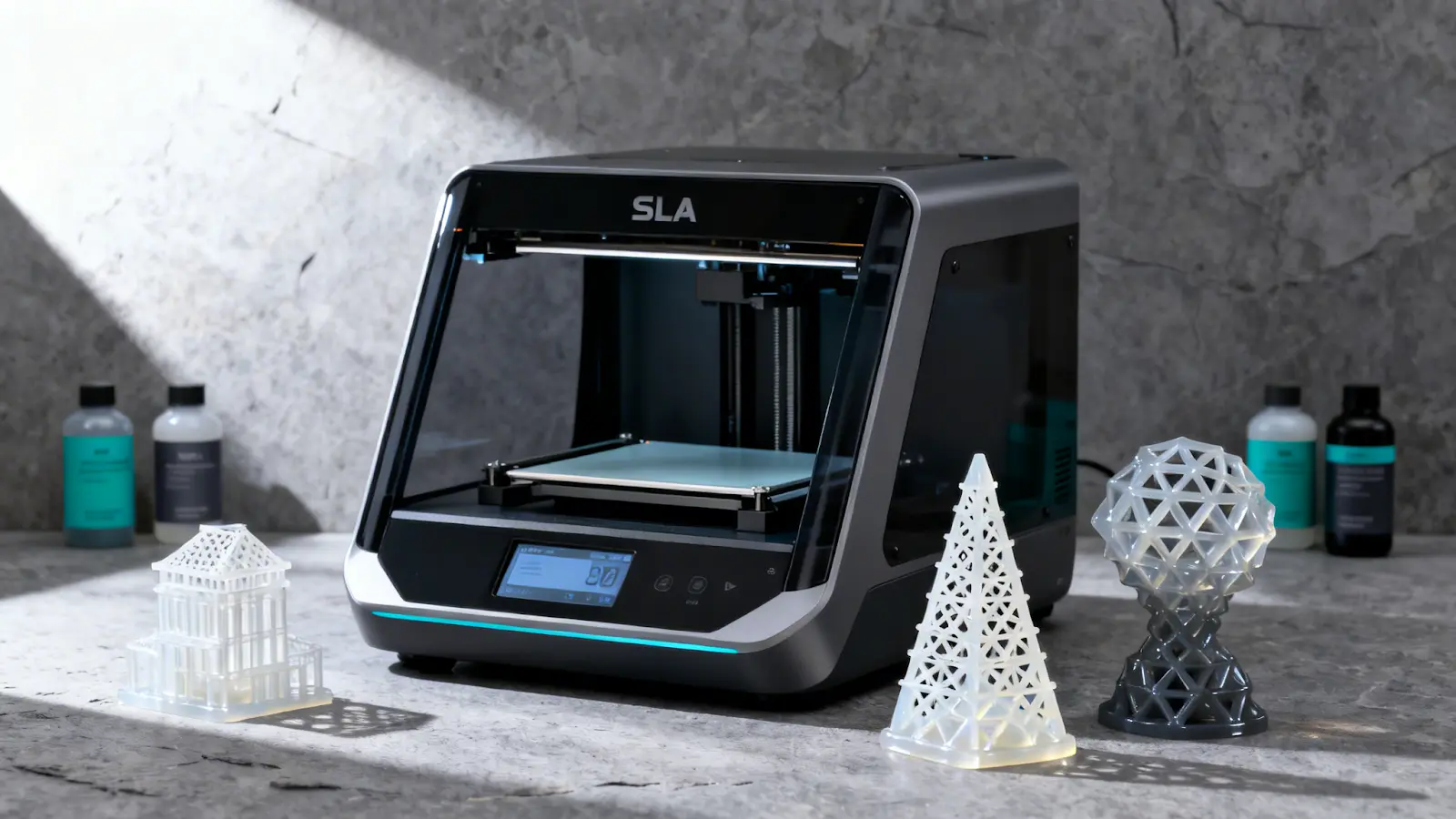
Stereolithography is a resin based process known for exceptional detail and smooth surface finish. It operates by directing a controlled UV laser beam onto a vat of liquid photopolymer resin. The laser selectively cures the resin layer by layer, transforming liquid material into solid form with extremely fine resolution.
Because the curing process is highly precise, this technology produces parts with minimal surface imperfections and sharp feature definition. This precision makes it ideal for presentation models and intricate prototypes where appearance, accuracy, and fine detailing are critical to the final outcome.
Surface Finish and Detail Accuracy
Through SLA 3D printing, designers can achieve sharp corners, smooth curves, and high dimensional accuracy that closely matches the original CAD design. The laser’s controlled path ensures consistent layer thickness, reducing visible stepping effects and delivering a refined surface straight off the machine.
The controlled curing process ensures minimal layer visibility and a professional grade appearance, often requiring only light post processing such as washing and UV curing. It is especially useful for dental models, jewelry masters, medical guides, and consumer product prototypes where aesthetics and micro level precision matter. Fine engravings, embossed logos, and complex textures can be reproduced with impressive clarity.
Material Versatility
Modern resins offer various properties including transparent finishes, flexible textures, castable compositions, and high temperature resistance. This range allows manufacturers and designers to select materials according to functional or visual requirements.
Businesses offering high resolution resin prototyping rely on SLA for visually impressive outputs that closely resemble final products. Transparent resins are often used for fluid flow models or lighting components, while engineering grade resins can simulate ABS like performance for functional testing. This material diversity expands the application scope beyond simple concept models.
When to Choose SLA
SLA is best suited for detailed, small to medium sized parts that require excellent visual quality and fine structural precision. It performs exceptionally well when the priority is surface smoothness, tight tolerances, and presentation ready appearance rather than heavy mechanical strength.
For industries such as dentistry, jewelry design, product development, and medical modeling, SLA remains a preferred solution due to its ability to deliver intricate results with consistent repeatability.
FAQs
Are SLA parts strong?
They are strong enough for prototype evaluation and certain functional tests but generally do not match the structural strength of industrial nylon or metal components.
Can SLA produce transparent parts?
Yes, transparent and translucent resins are available, making it possible to create clear models for visual inspection and fluid flow analysis.
For more information on 3D printing projects, visit KAD 3D.
Also Read
- How Data and Technology Are Transforming the Role of Commercial Real Estate Brokers
- Basement Waterproofing Guide: What’s the Best Method to Keep Your Home Dry?
- Stylish and Practical: Desert Coolers That Blend Into Your Home

