


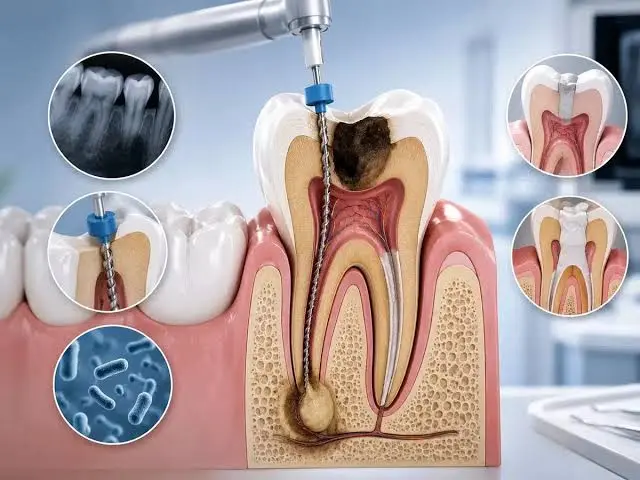
You might be here because a toothache went from annoying to unbearable, or because you woke up with a swollen face and a deep, throbbing pain that will not let you think about anything else. Maybe you are worried that you waited too long, that the tooth is “too far gone,” and that the only option left is to pull it. Streamwood cosmetic dental care can help you explore treatment options before extraction becomes the only choice.end
That fear is very real. Tooth pain can be overwhelming. It affects sleep, work, and even simple things like drinking water. You might feel guilty for putting off dental visits, or anxious about the cost and the idea of an emergency procedure.
Here is the short version. Many badly infected or painful teeth can still be saved with an emergency root canal. When treated in time, this procedure can remove the infection, stop the pain, and keep your natural tooth in place. When treatment is delayed, the risk of spreading infection, more complex treatment, or losing the tooth goes up.
So where does that leave you right now. It means you are not powerless, and there are clear next steps you can take today to protect your health and give that tooth a real chance.
What is actually happening inside your tooth when pain explodes?
To understand why an urgent root canal might be needed, it helps to know what is going on inside the tooth. Deep in the center is the pulp. This is living tissue with nerves and blood vessels. When decay, trauma, or a deep crack reaches this area, bacteria can get in and cause infection.
At first, this might feel like sensitivity to hot or cold. Then it can shift to sharp pain when you bite. Eventually, the pain may become constant, throbbing, and stronger when you lie down. Swelling in the gums or face can follow. At that point, you may be dealing with a serious infection, not just a “simple cavity.”
Because of this, you might wonder if antibiotics alone can fix the problem. According to the American Dental Association, antibiotics are not a cure for most dental pain and swelling when the source is the tooth itself. They are an aid, not a replacement, for proper dental treatment. You can see their guidance on antibiotic use in dental pain and swelling.
This is where an emergency root canal, sometimes called urgent endodontic treatment, comes in. The goal is not to “mask” the infection. The goal is to remove the infected tissue inside the tooth, disinfect the canals, and seal them so the tooth can function again without pain.
When is an emergency root canal still possible, and when is it too late?
The big question on your mind may be simple. Can my tooth still be saved. The honest answer depends on timing, the extent of damage, and the support structures around the tooth.
In many cases, a same day root canal for tooth pain is still very possible when:
- The tooth is badly decayed, but there is enough healthy structure left above the gum line to hold a filling or crown.
- The infection is inside the tooth and maybe in the nearby bone, but the tooth is not cracked all the way down the root.
- You can still open your mouth and the swelling has not closed off your airway or spread extensively.
On the other hand, a tooth might be beyond saving when:
- It has a vertical root fracture that splits the tooth down its length.
- So much tooth is missing that even with a crown there is nothing stable to rebuild.
- The supporting bone has been destroyed by long term infection, and the tooth is very loose.
For many people, it is not obvious which side of that line they are on. That is why a quick exam and an X ray are so important. According to clinical guidance reviewed in resources such as the StatPearls overview of endodontic emergency management, early treatment is strongly linked to better outcomes and fewer complications.
So the longer you wait, the more you increase the chance that the tooth will move from “saveable with root canal” to “needs extraction and more complex work.”
How does an emergency root canal compare with other choices?
When you are in pain, your mind may bounce between options. Do you just pull the tooth. Do you take painkillers and hope it settles down. Do you agree to the root canal now and worry about cost later.
To make this clearer, it can help to compare an urgent root canal treatment, extraction, and doing nothing for now.
| Option | What it involves | Short term effects | Long term impact | Typical use case |
|---|---|---|---|---|
| Emergency root canal | Remove infected pulp, clean canals, seal tooth, often followed by a crown | Rapid relief of pain once infection is addressed, temporary soreness | Keeps your natural tooth in place, maintains chewing and jaw alignment | Tooth is structurally saveable and infection is treatable |
| Extraction | Remove the entire tooth, sometimes with drainage of infection | Immediate removal of source tooth, soreness in extraction site | Gap in your bite, possible shifting of other teeth, may later need implant or bridge | Tooth is cracked beyond repair or has very poor long term outlook |
| Do nothing / only meds | Rely on painkillers, sometimes antibiotics without dental procedure | Temporary symptom relief at best, pain often returns or worsens | Higher risk of abscess, spread of infection, emergency hospital visit, tooth loss | Only when immediate dental care is physically unavailable, and only as a short bridge |
When you see the options side by side, it becomes clearer. An emergency root canal usually offers the best balance between relief now and health later, as long as the tooth is still restorable. Extraction can be the right choice in specific situations, but it is permanent. Doing nothing is rarely a safe plan, especially once swelling or severe pain has started.
What can you do right now to protect your tooth and your health?
In the middle of a dental crisis, clear steps help you feel more in control. Here are three actions you can take starting today.
-
Treat this as a medical urgency, not a minor annoyance
If you have severe tooth pain, swelling in your face or jaw, trouble swallowing, fever, or feel generally unwell, this is not something to “tough out.” Infections from teeth can spread. In rare cases they can become life threatening.
Reach out to a general and emergency dentist
-
Ask clearly about saving the tooth with root canal versus extraction
When you see the dentist, you have every right to ask direct questions.
- Is this tooth still a good candidate for an emergency root canal.
- What are the chances it will last if we treat it now.
- What would extraction mean for my bite and future treatment needs.
A thoughtful dentist will explain why they recommend one option over the other. For example, they might say that a root canal treatment can remove the infection and allow a crown to protect the tooth long term. Or they might explain that a crack extends too far, so saving the tooth would not be stable or fair to you.
Hearing the reasoning helps you make a calmer, more confident choice instead of feeling rushed.
-
Support treatment with smart home care, not “home cures”
While you are arranging care, some simple steps can help keep things from getting worse.
- Use over the counter pain relief as advised by a medical professional, and avoid putting aspirin directly on the gums, since this can burn the tissue.
- Rinse gently with warm salt water to help the area feel cleaner, especially if there is a bad taste from drainage.
- Avoid very hot or cold foods and chew on the opposite side to reduce shock to the tooth.
- Do not rely on online “cures” like placing harsh substances on the tooth. These often irritate the area and do not remove infection.
These steps are only a bridge. They help you stay a little more comfortable while you arrange the actual treatment that will stop the infection at its source.
Finding calm in the middle of a dental emergency
Tooth pain can make everything feel urgent, and in many ways it is. At the same time, you deserve a steady voice and a clear plan. An emergency root canal to save a tooth is often still possible even when things look and feel bleak, and choosing timely care can spare you from bigger procedures later.
Reach out to a trusted general and emergency dentist, explain your symptoms honestly, and ask about every realistic option to save your tooth. You do not have to solve this alone, and you do not have to live with that kind of pain. The sooner you act, the more choices you keep on the table, including the chance to hold on to your own natural tooth.
Also Read-Common Legal Mistakes Healthcare Startups Make In Texas And How To Avoid Them

