


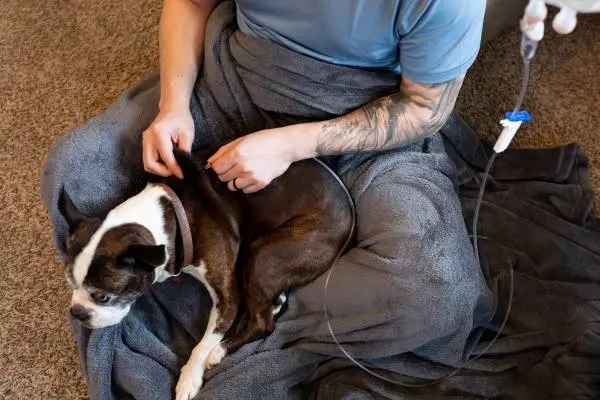
You brought your pet home after fluid treatment from a Fullerton CA veterinary hospital, set down the water bowl, and now you are watching every sip and every trip outside or to the litter box. That kind of checking is normal. When a pet has needed IV fluids, you have already had a scare, and small changes can feel loaded with meaning.
The short version is this. Some extra drinking and more frequent urination can happen after IV fluids, and that can be expected for a while. What matters is the pattern. Your pet should seem comfortable, alert enough to respond to you, and able to urinate without straining. Trouble starts when the drinking or urination seems absent, extreme, painful, or paired with vomiting, weakness, swelling, or breathing changes. That is when you call your veterinary hospital.
Why drinking and urination can change after IV fluid therapy
IV fluids are given to support circulation, correct dehydration, protect organs, and help the body recover from illness. The amount and type of fluid are chosen based on your pet’s condition, since fluid therapy plans are tailored to the patient. Once your pet comes home, the kidneys often work through that extra fluid, which can mean fuller urine output for a period of time.
You may also see the opposite at first. A pet who still feels nauseated, tired, or sore may not rush to the bowl right away. That does not always mean something is wrong. It does mean you should keep track. A dog that sleeps for a few hours after discharge and then drinks a modest amount may be doing exactly what recovery looks like. A cat that hides, refuses water all evening, and has not urinated by the next day needs a closer look.
The real concern is not just whether your pet drinks or pees more or less. It is whether the body seems able to regulate normally. If your pet strains, cries, squats repeatedly with little output, or dribbles urine, that is not a wait and see moment. Male cats are a clear example. A blocked cat can decline fast, and urinary blockage is an emergency for male cats.
Normal recovery signs and red flags after pet IV fluids
After bringing a pet home after IV fluids, many owners expect a neat checklist. Recovery rarely looks that tidy. Your pet may drink more that evening, then settle down the next day. They may urinate larger amounts for several walks, then return to their usual routine. If they were dehydrated before treatment, improved thirst can actually be reassuring, since hydration affects energy, appetite, and kidney function. The effects of dehydration are well recognized across species, including in veterinary wildlife care, where dehydration can quickly affect body systems.
What tends to worry owners most is uncertainty. Is this thirst just fluids working through the body, or is it a sign of diabetes, kidney disease, or another problem that has not resolved? Is the lack of urination because your cat is stressed, or because there is an obstruction? Those questions are fair, and they are exactly why discharge instructions matter. If your pet’s diagnosis included kidney issues, urinary disease, toxin exposure, fever, or severe vomiting and diarrhea, your home monitoring carries more weight.
Post-IV fluid drinking and urination in pets should gradually make sense in context. A dog treated for dehydration from stomach upset may drink a bit more and pee more for a day. A cat treated for a urinary problem should be watched much more closely for litter box behavior, urine volume, and comfort. The treatment is only part of the story. The reason your pet needed fluids matters just as much.
What to monitor during the first day home
| What You See | Often Expected | Call the Veterinary Hospital |
|---|---|---|
| Drinking | Mild increase in thirst, especially in the first several hours | Refuses water for a prolonged period, cannot keep water down, or drinks frantically and seems unwell |
| Urination | Larger or more frequent urine output for a short time | No urination, straining, crying, repeated attempts with little output, blood, or accidents with distress |
| Energy | Tired, quiet, resting more than usual | Collapse, severe weakness, confusion, or inability to get comfortable |
| Breathing | Calm, normal breathing at rest | Fast breathing, labored breathing, coughing, or swelling of the face or limbs |
| Appetite | Delayed interest in food, then gradual return | Persistent vomiting, worsening nausea, or no interest in food along with other symptoms |
This is where veterinary hospital guidance matters more than internet averages. A senior dog with heart disease, for example, may need closer attention after fluids because too much fluid can stress the body differently than it would in a healthy young dog. A cat who had a urinary blockage has a very different home checklist than a puppy treated for diarrhea.
Three steps to take when you get home
- Track the basics for 24 hours. Write down when your pet drinks, urinates, eats, vomits, or seems uncomfortable. Do not rely on memory. If you need to call, those details help the team decide whether this sounds expected or urgent.
- Make water easy, not forced. Offer fresh water in the usual spot. For cats, a second bowl in a quiet area often helps. For dogs, take a few extra potty breaks because increased urine volume can show up before their normal schedule catches up. Do not push large amounts of water at once unless your discharge instructions say to.
- Watch for effort, not just output. A pet who urinates a small amount but looks relaxed may simply be readjusting. A pet who keeps trying, postures often, vocalizes, or licks at the urinary area is telling you something is wrong. That is the moment to call your care team.
Steady monitoring lowers the stress
Pet recovery after IV fluids often involves a little extra thirst and urination, and that can be part of the body returning to balance. You do not need to panic over every longer drink or larger puddle. You do need to notice whether your pet seems comfortable and whether urine is passing normally.
If anything feels off, trust that instinct and contact your veterinary hospital. Early questions are easier to handle than late emergencies, and a quick call can spare your pet a harder night.
Also Read
- creative-ways-to-use-custom-gang-sheets-for-apparel-printing/
- empowering-lives-ndis-physiotherapy-services-unveiled/
- rf-technology-roi-guide/

